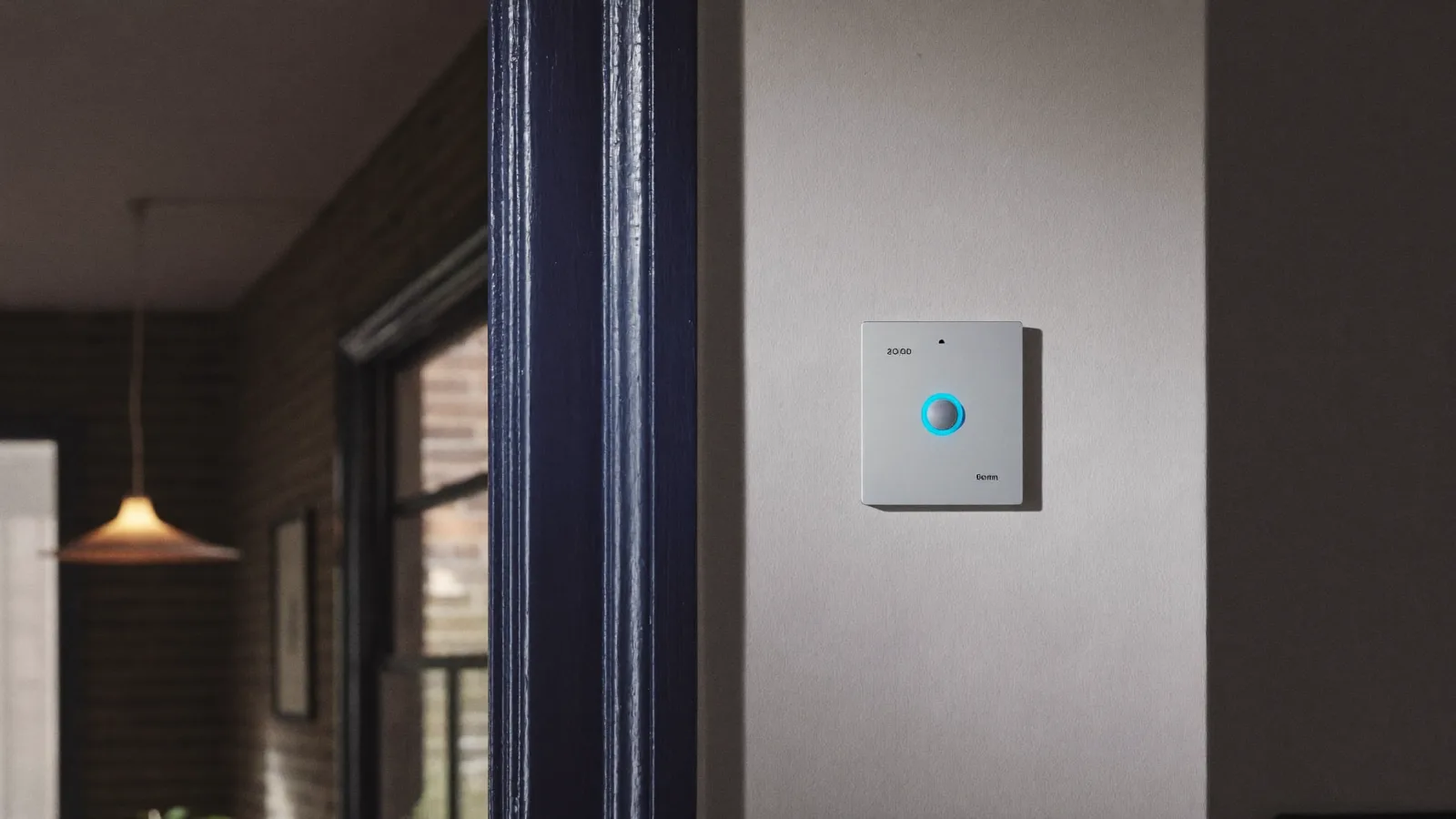
Walk into most houses around Marlow and you'll find light switches that went in when the house was last rewired — often decades ago. So when people ask me about smart lighting, they usually assume it means an electrician for a week, channels chased into the plaster, and dust in every room. In most homes, it doesn't.
Why older homes catch people out
The problem has a name: no neutral. In most UK homes wired before the 2000s, the cable at the light switch carries a switched live and nothing else. The neutral wire a smart switch needs to power itself runs through the ceiling rose instead.
Nearly every cheap smart switch online assumes a neutral at the switch, because that's how American and new-build homes are wired. People buy one, unscrew the faceplate, find two wires where the instructions promised three, and send it back.
The three routes that actually work
None of these involve opening up walls, and all three play nicely with older wiring:
- Smart bulbs. Screw in, connect, done. Ideal for lamps and single rooms, and you can fit them yourself. The catch: if someone flicks the wall switch off, the bulb drops off the system until it's flicked back on.
- No-neutral smart dimmers. Purpose-made for UK two-wire circuits, these replace the existing faceplate and work with the wiring you already have. The wall switch stays a wall switch — it just gets smarter.
- Hidden modules. A small relay tucked behind the switch or up at the ceiling rose, where a neutral usually does exist. Your original switches and fittings stay exactly as they are, which matters in a period hallway.
What I'd actually recommend
If all you want is a couple of table lamps coming on at dusk, buy smart bulbs. £12–£15 each, ten minutes of setup, no electrician, no ongoing cost. Don't pay anyone — me included — to install those for you.
For whole rooms or a whole house, I fit no-neutral dimmers or hidden modules on a Zigbee mesh, tied into Home Assistant. Everything is controlled locally, so there's no monthly subscription, and your lights don't ignore their schedule just because your broadband went down.
Zigbee matters more than people expect in period properties. The solid brick walls in older homes around Henley and Cookham soak up Wi-Fi, but a Zigbee mesh gets stronger with every device you add, because each one relays for its neighbours.
And every install has to pass one test: the switch on the wall still works like a normal switch. If your guests need an app tutorial to turn off a light, the design has failed.
Before you buy anything
A five-minute check saves most of the returns-label misery:
- Turn off the circuit and unscrew one switch — count the wires. Two means no neutral, so buy accordingly.
- Check the back box depth. Older 16 mm boxes won't take most smart dimmers; 35 mm is comfortable.
- Going the dimmer route? Make sure your bulbs are dimmable LEDs — a mixed bag of old bulbs is where flicker comes from.
- Pick one ecosystem and stay in it, rather than collecting five apps that don't talk to each other.
- Anything beyond swapping a bulb is electrical work — use a qualified electrician. In older houses, the surprises behind the faceplate are half the job.
Worth doing properly
Smart lighting is one of the rare upgrades that suits older homes better than new ones — warm dimmed light flatters a period interior, and nothing visible needs to change. Done right, the house looks exactly as it always did. It just quietly works better.
If you need help with smart lighting in Berkshire or Buckinghamshire, get in touch — I'll tell you straight away if a bag of smart bulbs is all you need.